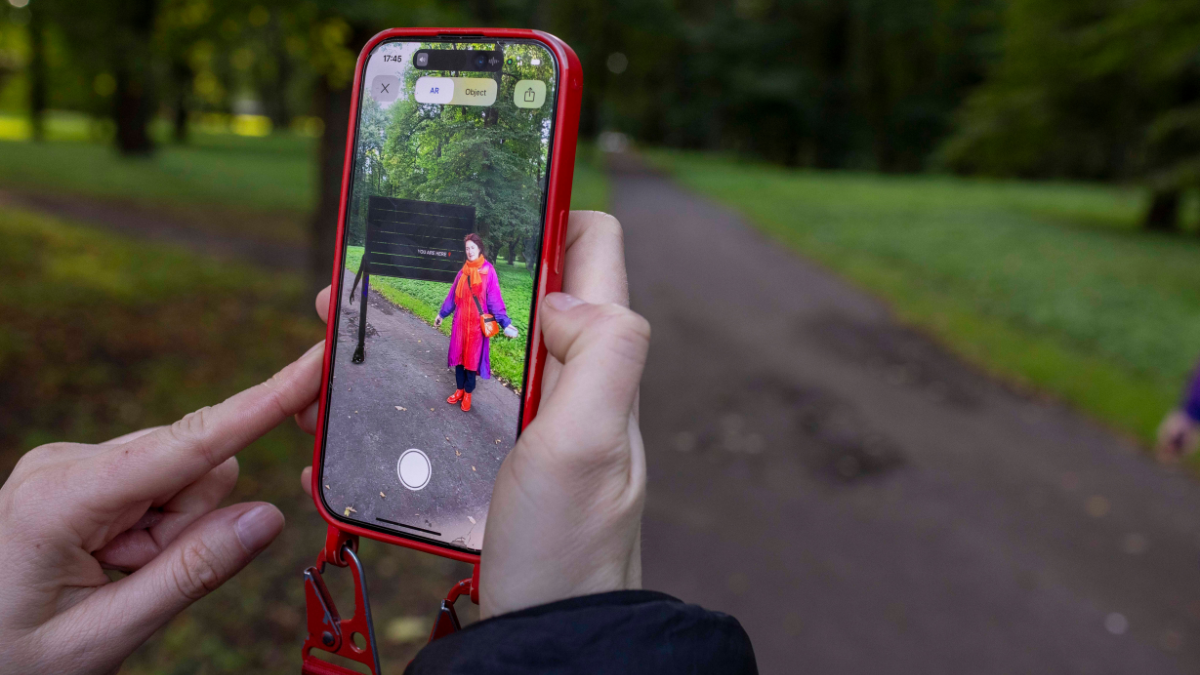
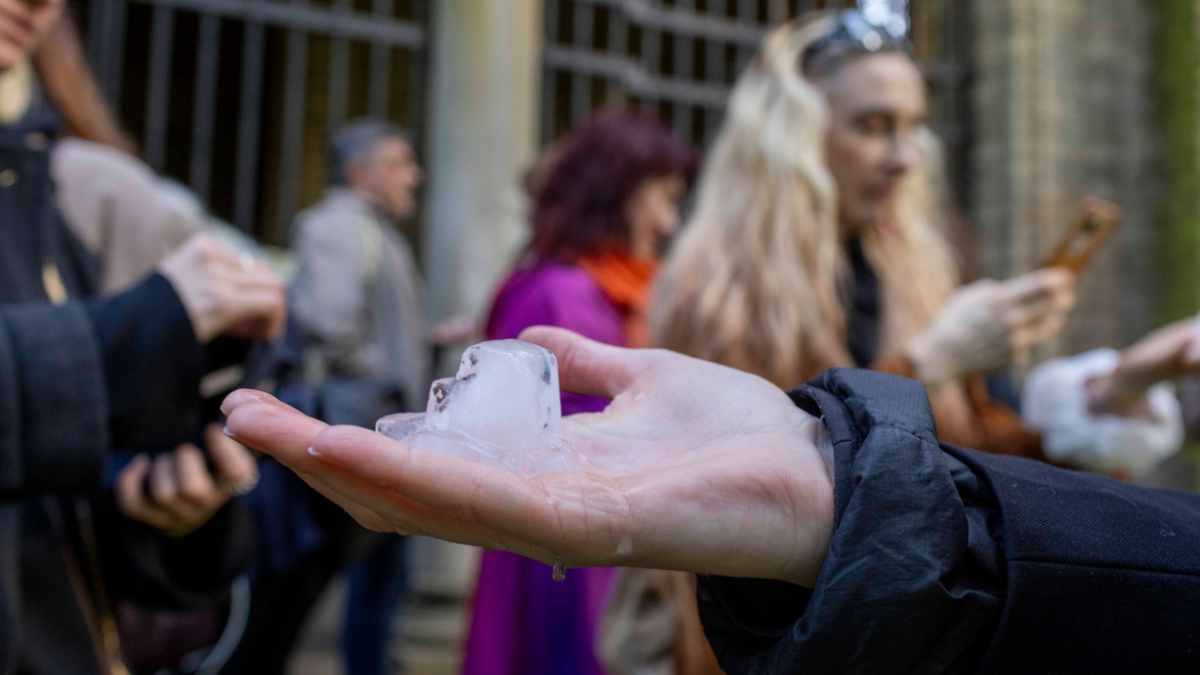
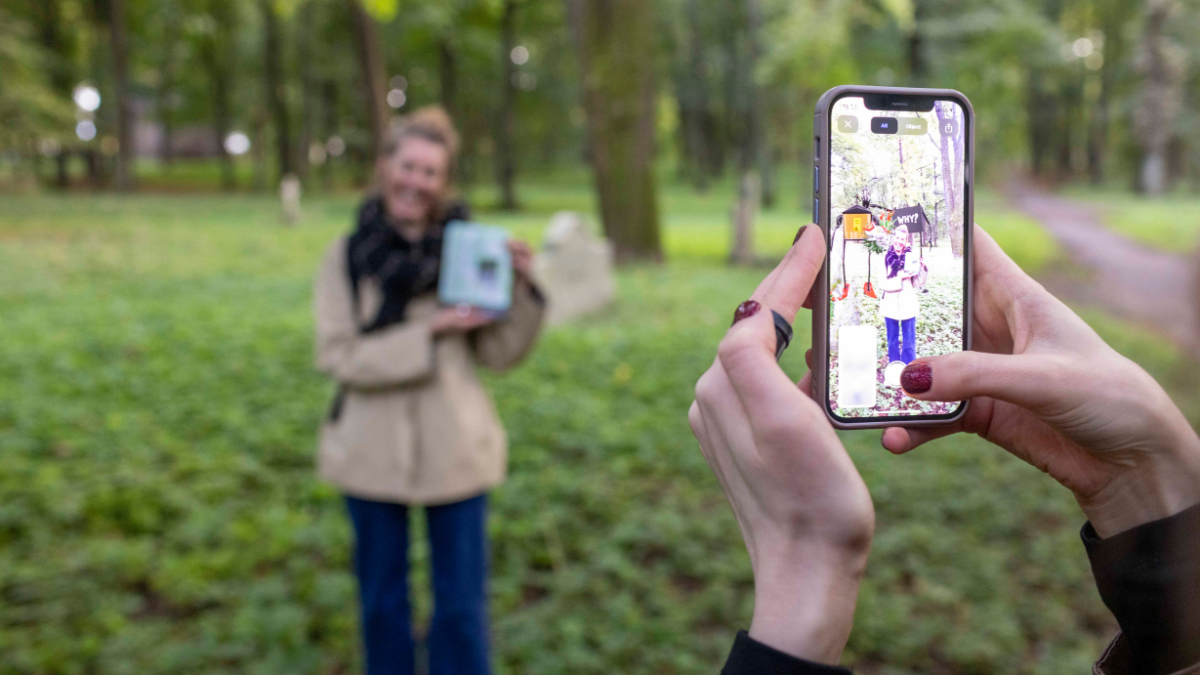
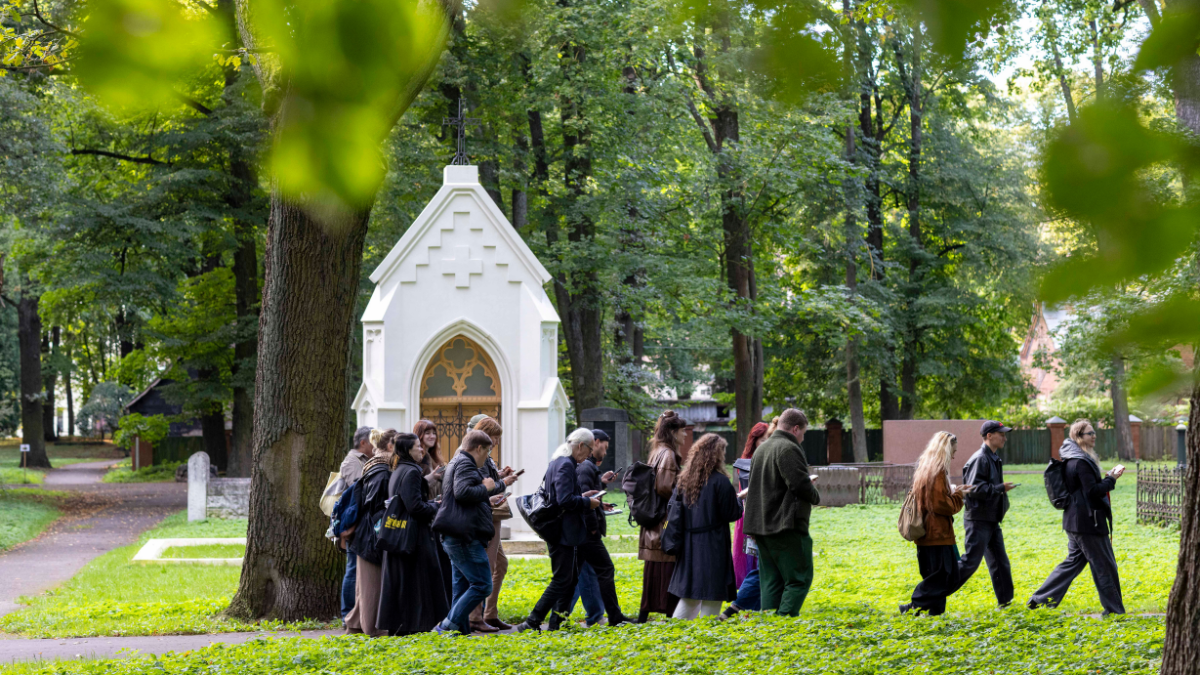
The Latvian Centre for Contemporary Art (LCCA) and the arts and media culture agency M-Cult invite you to experience Protocols for Melting – a site-specific artwork in the form of an augmented reality (AR) walk created by artists Joonas Hyvönen and Līga Spunde, and curator Jussi Koitela. The Protocols for Melting walk can be explored in Riga – at the Great Cemetery – and at the Helsinki Central Park until September 2026.
The project is part of the Latvian Centre for Contemporary Art’s 25th-anniversary program, Time, Dawn, or a Passing Train.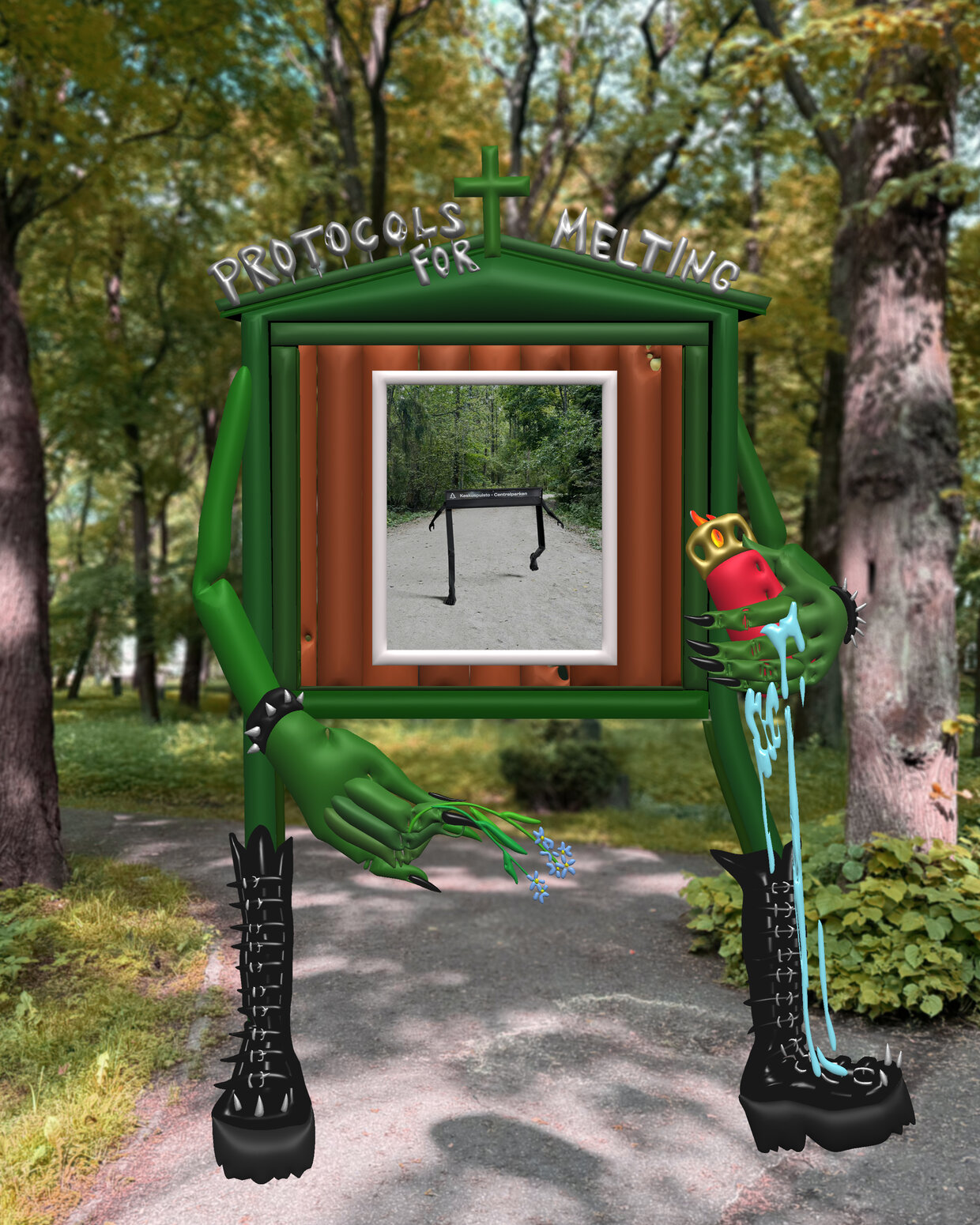
Joonas Hyvönen and Līga Spunde: Protocols for Melting, augmented reality walk, 2025
Protocols for Melting: Concept & Context
Protocols for Melting focuses on park areas undergoing gradual or rapid social and ecological changes, emphasizing the significance of these places for local communities. It also highlights internal struggles familiar to both activists and algorithms—the constant desire to be seen, the exhaustion that arises from it, and the slow “melting” as initial intentions gradually fade.
Walkers, guided by a specially designed “compass” – an animated avatar – follow a looping route in which digitally augmented signs serve as performative stops, coming alive in a darkly comedic tragedy about wayfinding under the conditions of the late-capitalist attention economy.
The artwork in Helsinki is inspired by the recently introduced, often contradictory park signage and local resistance to plans for a snow dumping site. It explores tensions between orientation, control, and ecological stress. In Riga, the work transforms into an almost ceremonial funeral march, where these same impulses are symbolically laid to rest amid the stillness of the cemetery, a territory that has been transformed into a park.
How to access the work in RIGA:
1. Head to the Great Cemetery – the walk starts at the parking lot on Miera Street (near the "Kazarmu iela/Lielie kapi" tram stop).
2. When you are on site, open the art work here: https://www.rigaprotocols.m-cult.org/
3. Allow access: Enable device orientation and location tracking when prompted.
4. Follow the Trout: The indicator shows the shortest path, but all stops are reachable via formal park routes.
5. Activate AR stops: When you reach a designated location, open the augmented reality element as instructed. To continue, simply close it.
6. Observe the melting.
If access issues occur:
iOS
If orientation and movement access are blocked, erase the site data (Settings → Safari → Advanced → Website Data → Remove All Website Data) or open the site again in private browsing mode.
Android
If orientation and movement access are blocked, check your browser settings for motion/orientation access.
Information about the walk in Helsinki is available on the M-Cult website here.
About the artists
Līga Spunde (b. 1990) is a visual artist based in Riga, Latvia. She presents her works as multimedia installations, intertwining personal stories with deliberate fiction. The interpretations and use of recognisable characters serve as an extension of her personal experiences, tapping into universal truths. The work’s content determines the conception’s physical form leading the artist to use various media and materials in her installations.
Joonas Hyvönen (b. 1990) is an artist working primarily with digital media, film, and games. His works are often narrative-driven studies utilizing storytelling as an instrument of reflection. Hyvönen graduated from the Academy of Fine Arts in 2016 with a Master’s degree in Fine Arts.
Soundtrack for the Artwork:
In Riga: "Frédéric Chopin - Piano Sonata No. 2 in B-flat minor, Op. 35, III.", Soundby Waterflower
In Helsinki: "Lintu lensi oksalle", Performer: Abelard Bäckman
Application development: Tatu Heinämäki
__
The event was created in collaboration between the arts and media culture agency M-Cult and the Latvian Centre for Contemporary Art (LCCA), as part of LCCA’s 25th anniversary programme Time, Dawn, or a Passing Train, and continues M-Cult’s long-term engagement with the development of Helsinki’s Central Park (Keskuspuisto).
The project is supported by Nordic Culture Point, the Riga City Council, and the Latvian National Cultural Capital Foundation.