Visual identity by Marta Folkmane and Dans Jirgensons
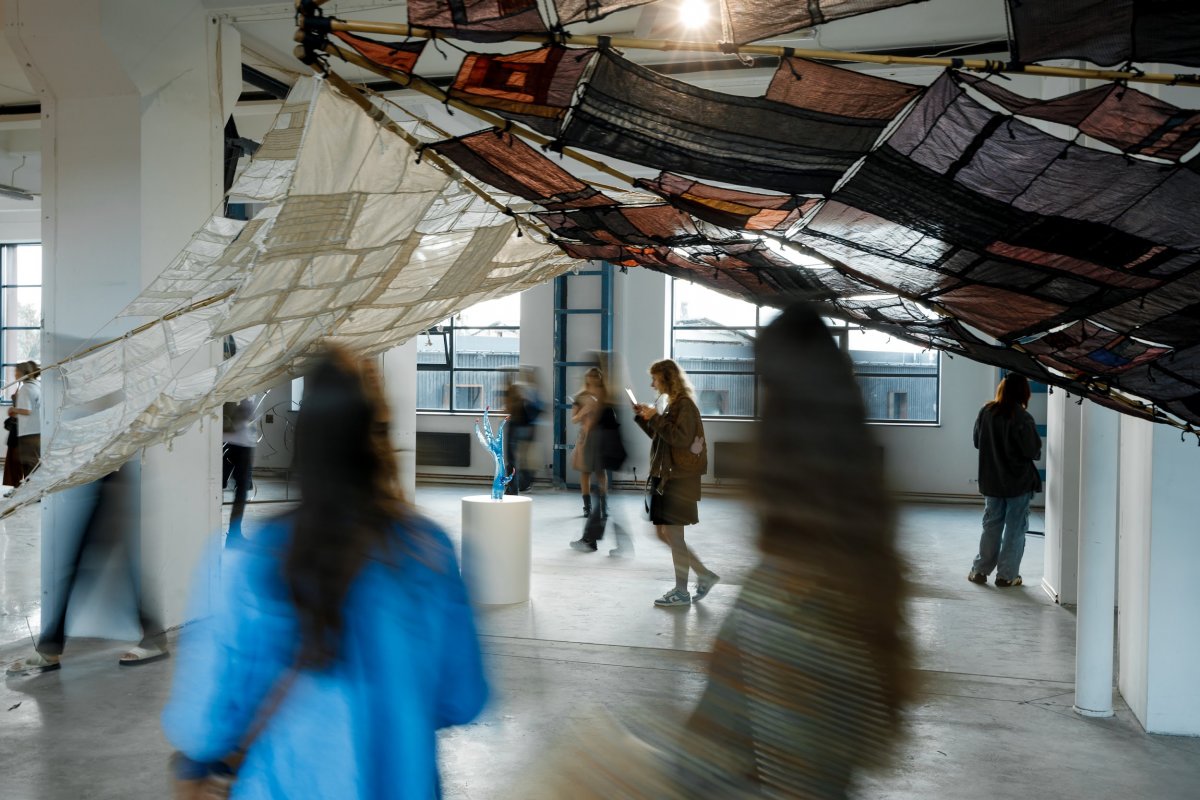
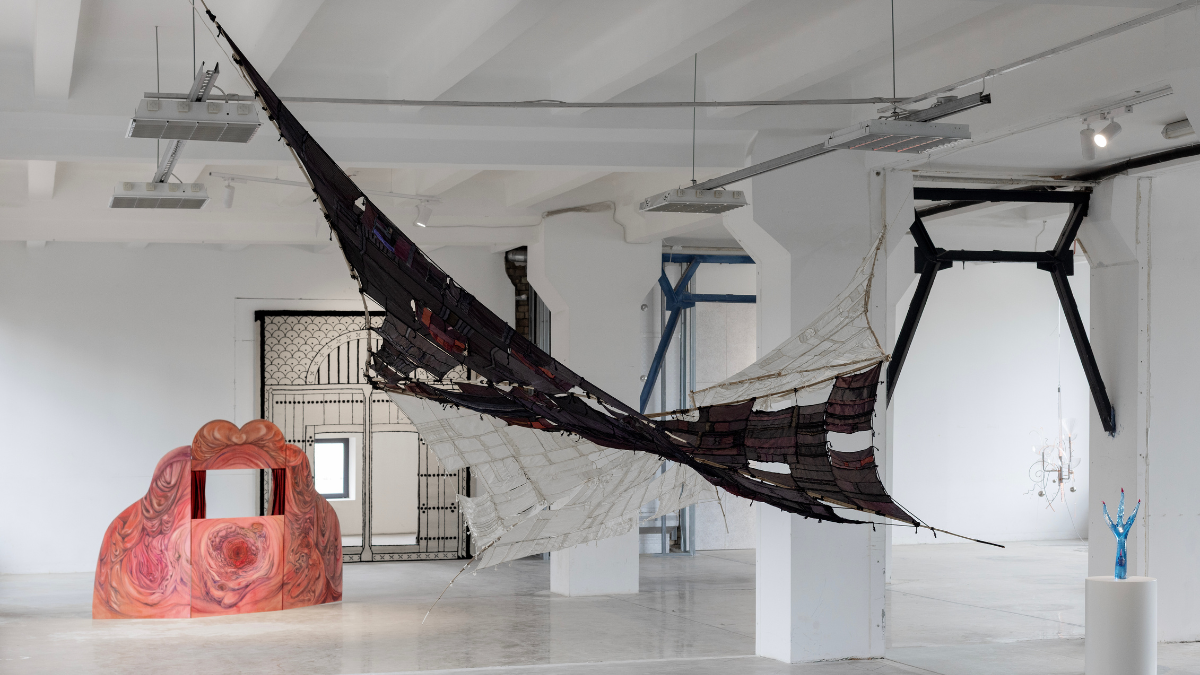
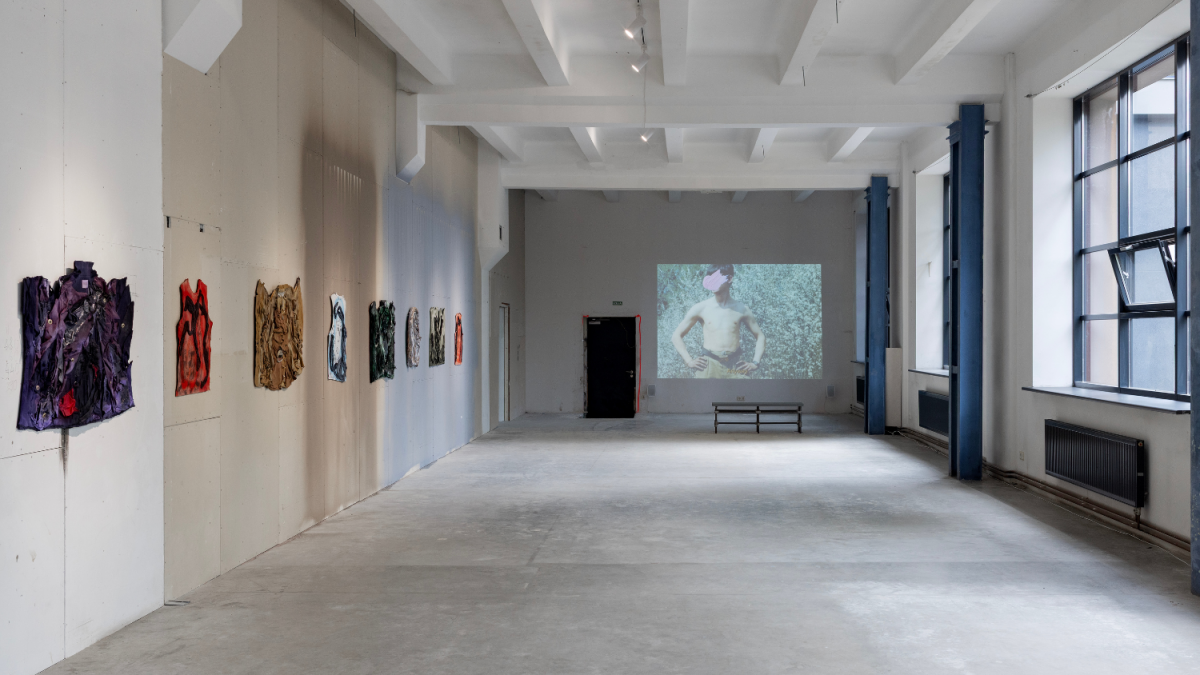
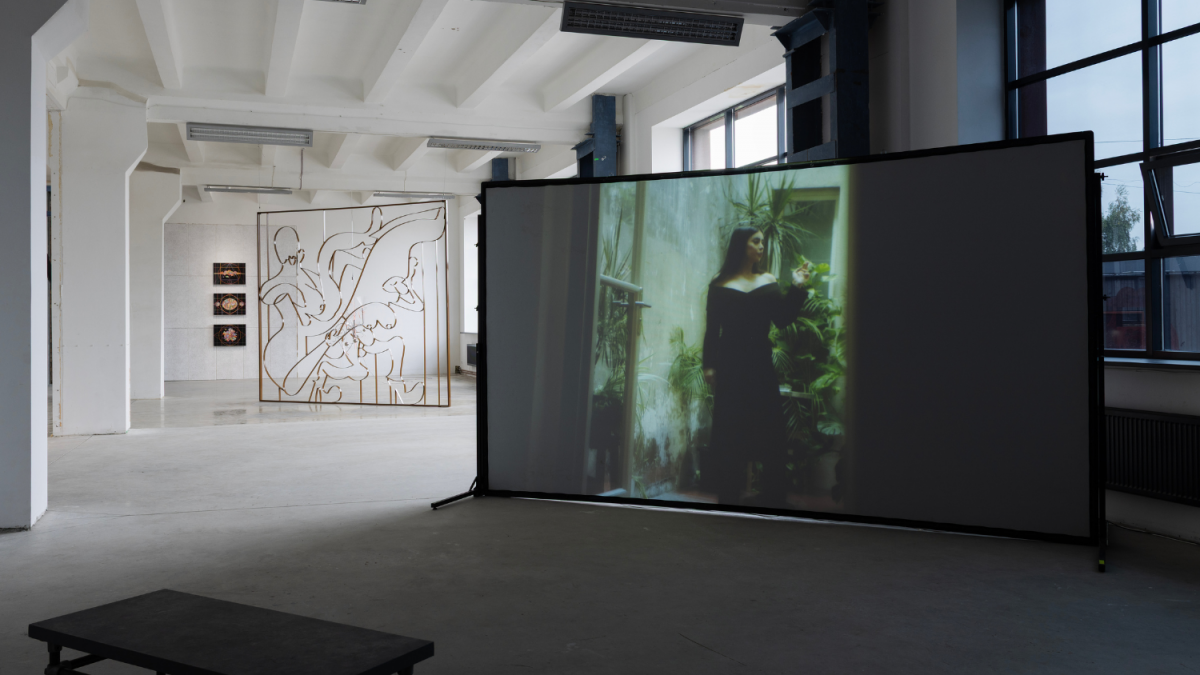

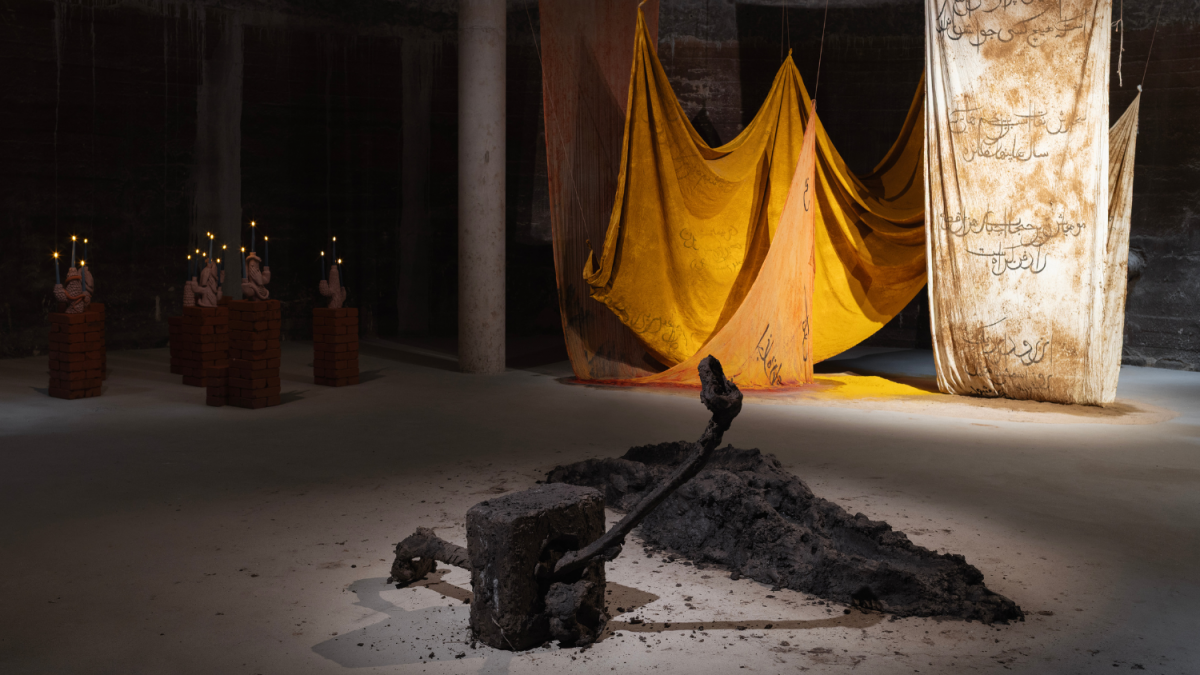
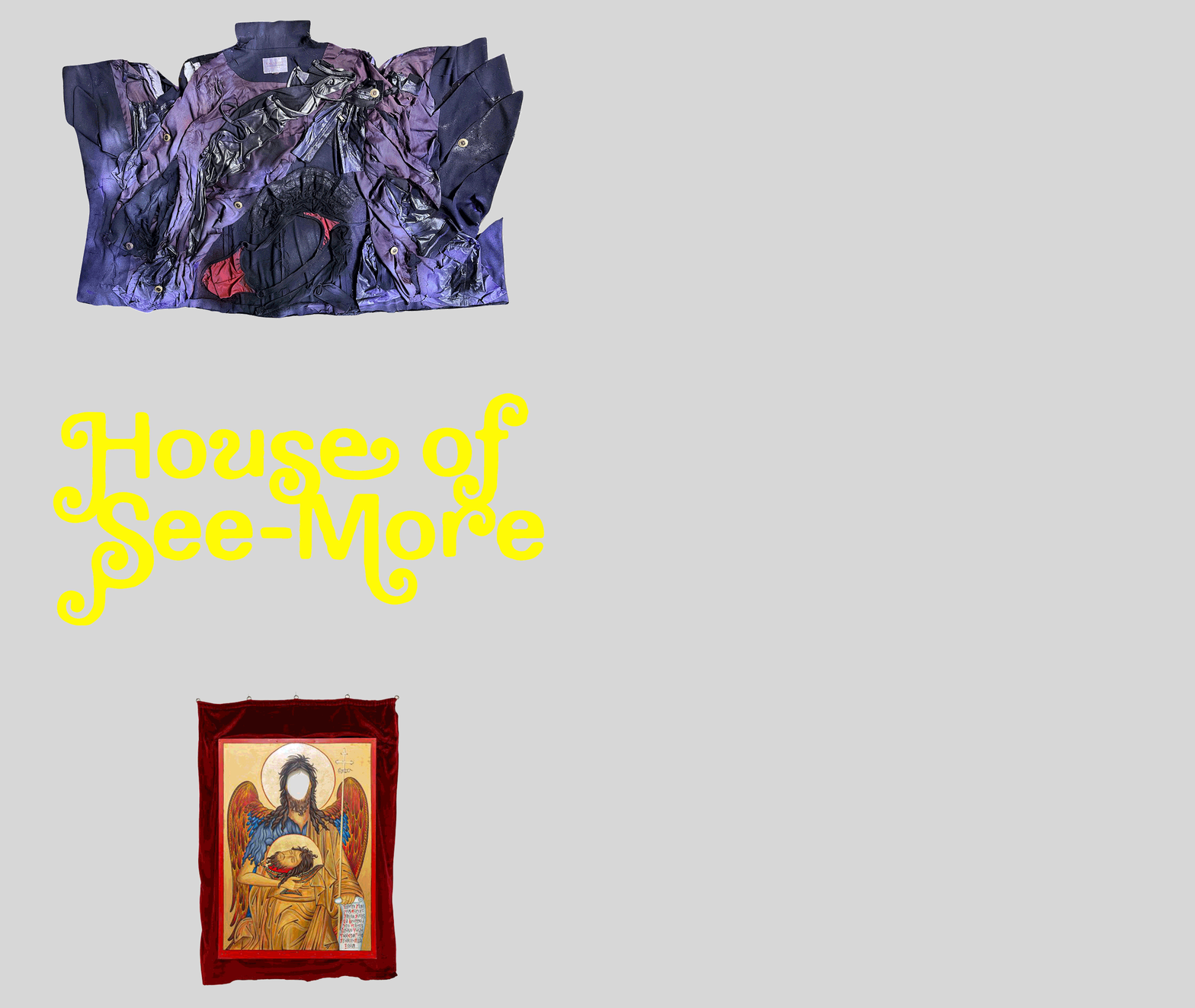
From August 30 to September 28, the 16th edition of the annual international contemporary art festival Survival Kit takes place in Riga, Latvia. Organized by the Latvian Centre for Contemporary Art (LCCA) and curated by Slavs and Tatars and Michał Grzegorzek, the Survival Kit 16 exhibition, titled House of See-More, features 23 artists and is held at the creative quarter Grīziņdārzs, located at Zemitāna iela 9, Riga.
The venues of Survival Kit – typically abandoned or unused buildings – have always been a core part of the festival’s identity, serving to map urban development strategies and spotlight the potential of overlooked spaces. This year, for the first time in the festival’s history, Survival Kit takes place within a contemporary architectural project, the revitalised site of the former Riga Knitting Factory – in the Grīziņdārzs creative quarter – a location that is dynamically transforming from a “placeless” place into a new urban centre.
Taking Simurgh – the mythical bird found across Eurasia – as a departure point, the annual international contemporary art festival in Riga addresses the critical state of transnationalism via the flamboyance of the flaming bird, an understanding of liberation as both metaphysical and political.
From Aristophanes’ The Birds to Faruddin Attar’s The Conference of the Birds to the Latvian cycle of songs The Birds Wedding, winged creatures often come together, overcoming their respective limits as individuals, to achieve something larger than themselves.
For Survival Kit 16, Slavs and Tatars and Michał Grzegorzek see in Simurgh a resolutely transnational creature as device – another means of defining a region extending from China to northern Ukraine, and “equally interested in the ecstatic as the electorally eligible.”
Grzegorzek and Slavs and Tatars elaborate: “Where the eagle projects empire and nationalism, a lazy form of toxic masculinity, Simurgh is literally flaming, and non-binary, sometimes gendered as a woman, and of the next world, not this one. Epiphany often requires one to die before one dies: The legend offers House of See-More as an equal reflection and antidote to the blurred boundaries between the generative and the extractive, the analytical and the affective, the singular and the multiple.”
Organisers and supporters
The festival is organised by the Latvian Centre for Contemporary Art.
The festival is supported by the Ministry of Culture of the Republic of Latvia, the State Culture Capital Foundation, Riga City Council, the Adam Mickiewicz Institute and the Ministry of Culture and National Heritage of the Republic of Poland, the Embassy of the Republic of Italy in Riga, the French Institute in Latvia, the Goethe-Institut Riga, the Investment and Development Agency of Latvia, and Riga Investment and Tourism Agency and VV Foundation.
Festival partners: Creative City “Grīziņdārzs”, Molberts, Cewood, Kultūras Diena, Riga Neighborhood.
___
REVIEWS
When Simurgh Invites Us to See-More. Interview with Payam Sharifi (Sergej Timofejev, Arterritory.com)
Challenging the Boundaries. Survival Kit House of See-More (Niccolò Lucarelli, Contemporary LYNX)
Riga Arts Festival 2025: Survival Kit 16 Highlights (Joanne Shurvell, Forbes)
From the Ashes: Survival Kit 16 (Elise Morton, CANVAS)
Rigaer Survival-Kit-Festival. Kunst als Überlebensmittel (Ingo Arend, Monopol)
Contemporary Artists in the Baltics Fight Instability with Connection (Naima Morelli, Observer)
On Survival Kit’s Sweet 16: House of See-More (Yana Foqué, Echo Gone Wrong)
___
GIF Captions:
1] Filipka Rutkowska, Karen Scott, 2025. Courtesy of the artist. [2] Kexin Hao, The Tunnel, 2024. Digitally composed scans of analogue drawings. Courtesy of the artist. [3] Nadia Markiewicz, Lonesome Wing, 2024. Performance. Costume production by Wisła Nicieja. Photo: Mateusz Kowalczyk. [4] Oksana Shachko, Untitled (Saint Jean-Baptiste), 2016. Gold leaf, oil and acrylic on cardboard and fabric, 167 × 117 cm. Private collection, Ghent