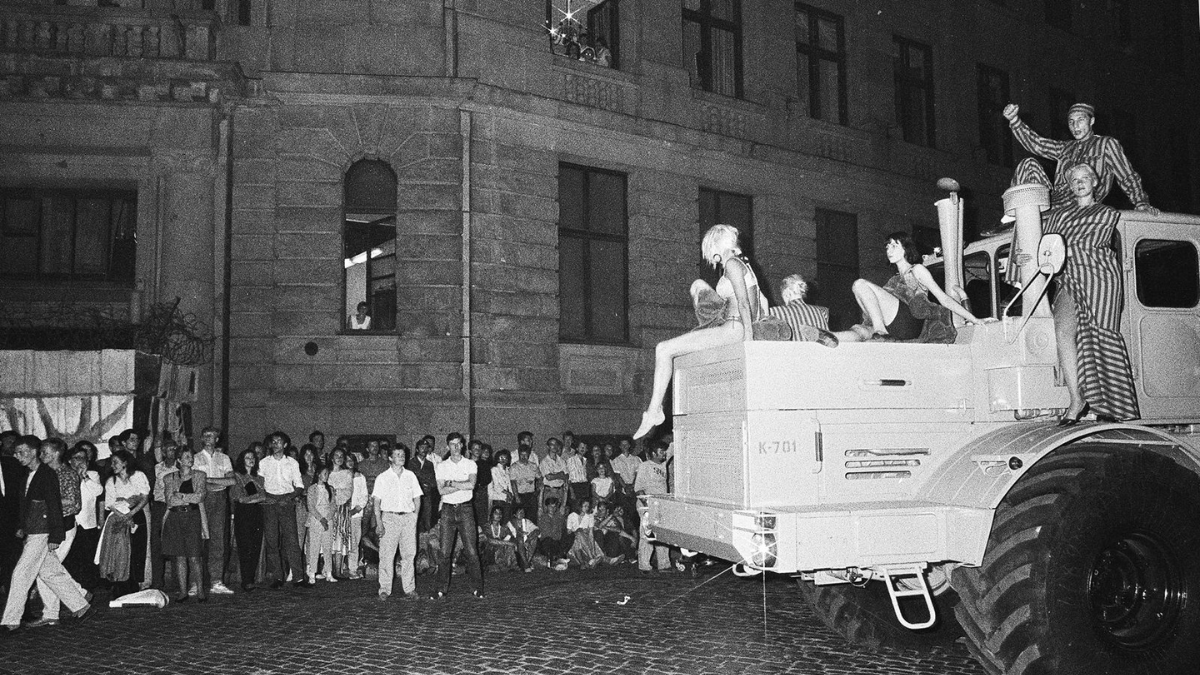
Untamed Fashion Assemblies, 1991 opening performance at Dome Square, Riga, Costume from Ball of Postbanality by U.Rukutis & B.Birmanis (1989). Photo by Aivars Liepiņš.
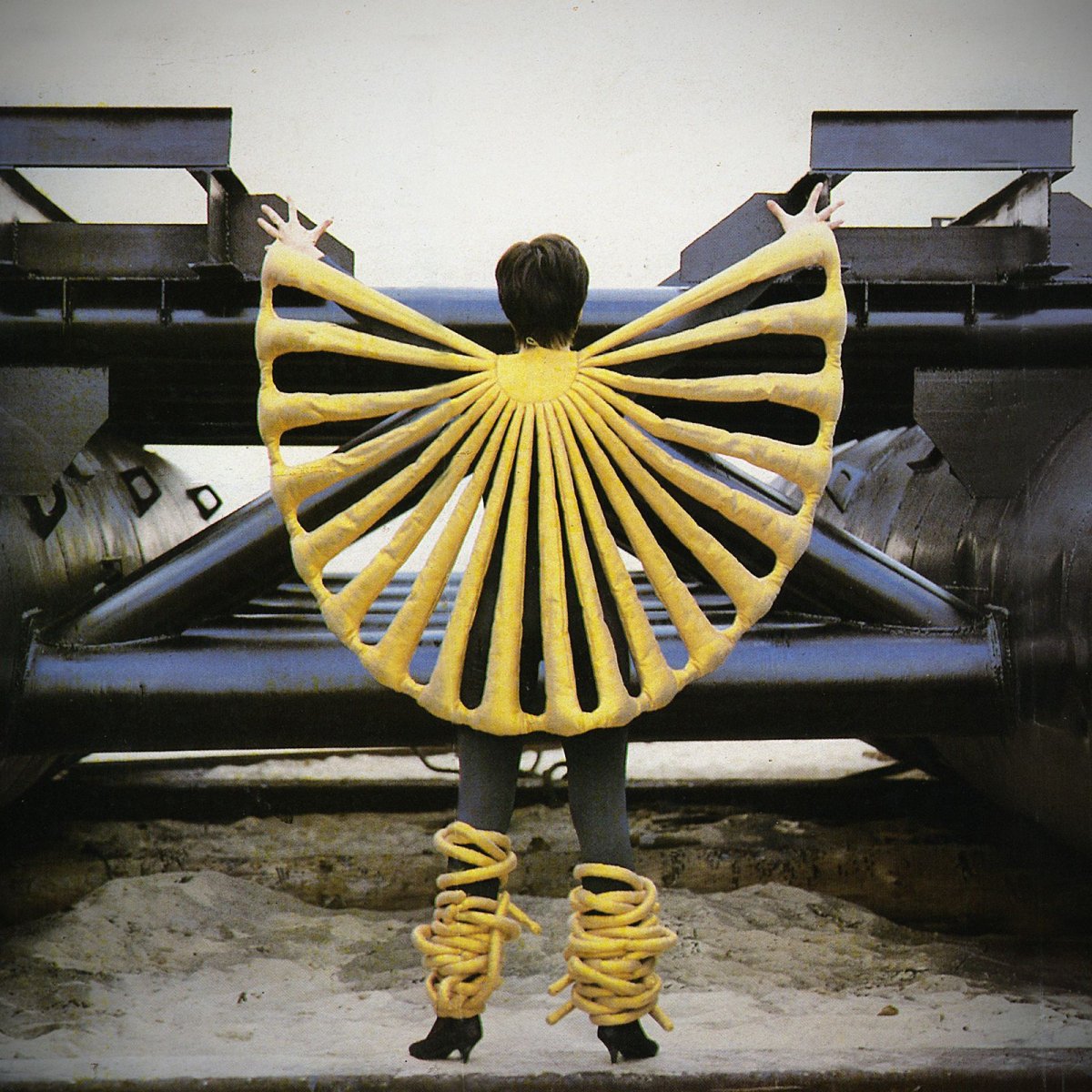
Dress from “The Post-Banalism Ball”. Designer Bruno Birmanis, 1989. Photo: Uldis Pāže
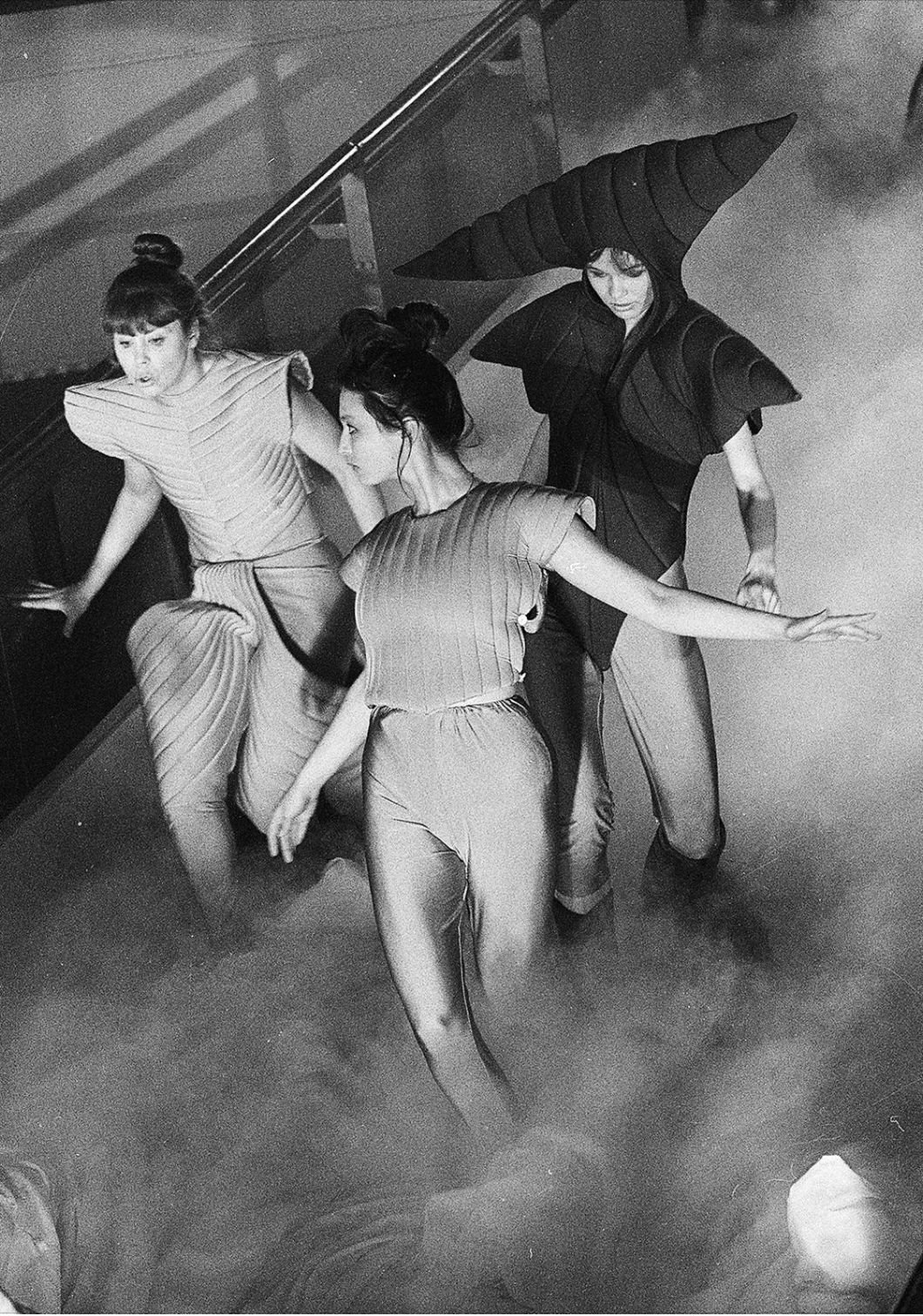
Untamed Fashion Assemblies 1994 opening performance at Riga Motor museum. Bruno Birmanis collection. Photo by Aivars Liepiņš.
The Latvian Pavilion at the 61st Venice Biennale presents Untamed Assembly: Backstage of Utopia, an exhibition dedicated to the radical legacy of the Untamed Fashion Assembly (UFA), a one-of-a-kind interdisciplinary event at the intersection of experimental fashion and visual art, held in Riga throughout the 1990s. Curated by Inga Lāce and Adomas Narkevičius, the pavilion brings together archival material and new scenographic interventions to revisit the project’s visionary spirit through the work of UFA’s founder, Bruno Birmanis, and the contemporary artist-designer duo MAREUNROL’S. Commissioned by the Latvian Centre for Contemporary Art and supported by the Ministry of Culture of the Republic of Latvia, the exhibition will run from 9 May to 22 November 2026.
Untamed Fashion Assemblies (1990-1999), initiated by artist and designer Bruno Birmanis, were unprecedented interdisciplinary gatherings at the intersection of fashion, performance, drag, club culture, and visual art. At a time of profound political and cultural transition, they carved out a space for artistic freedom beyond both Soviet social norms and Western markets. The Assemblies drew together local and international designers, artists, and students, fostering transnational solidarities and experimental practices across the Baltics, Caucasus, Central Asia, and Western Europe.
Echoing the carnivalesque logic of the Assemblies, Untamed Assembly: Backstage of Utopia approaches them as an unfinished project, one that speaks to urgent conversations around artistic experimentation, gender self-performance, anti-consumerist production, and collective imagination. In a time of renewed authoritarianism and market enclosure, the Assemblies offer a vital counter-history: a space where irreverence, joy, and self-expression briefly took centre stage. The exhibition asks how this resonates today, what kinds of solidarities, identifications, and forms of beauty may be dreamt into being when the rules are, even briefly, suspended.
Curators of the Pavilion Inga Lāce and Adomas Narkevičius elaborate, "Untamed Fashion Assemblies emerged in a moment of upheaval, when the collapse of one system had not yet given way to another. They offered a space where artistic expression could break loose from the strictures of ideology and market logic alike. Unconfined by the theatre stage or the commercial runway, fashion became a tool for self-narration, excess, and joyful defiance, a place where fantasy didn’t need to justify itself. What unfolded in Riga wasn’t an attempt to mirror the West, but something stranger, and radically its own."
Untamed Assembly: Backstage of Utopia was selected by a jury, which was headed by the Director of the Latvian National Museum of Art (LNMM) Māra Lāce, and included Maria Arusoo, Director of the Estonian Centre for Contemporary Art, Sebastian Cichocki, Curator of the Museum of Modern Art in Warsaw, Līga Marcinkeviča, Head of the Master's Programme at the Latvian Academy of Arts (LAMA), and Kitija Vasiļjeva, Producer of the Latvian Pavilions at the 56th and 59th Venice Art Biennale.
Commissioner of the Latvian Pavilion, Solvita Krese, LCCA comments, “This project is a powerful reflection of LCCA’s long-term mission to illuminate overlooked or lesser-known aspects of our recent history, to reconsider and rewrite dominant narratives, and to restore significance to past events that deserve recognition. We continue to explore artist archives, inviting contemporary practitioners to re-interpret them through a current lens. At present, we are focusing on research around the Untamed Fashion Assembly — a phenomenon of its time with a profound and lasting influence on the region’s creative landscape. I’m especially pleased that this story will now find a stage in Venice, in collaboration with MAREUNROL'S, weaving its subversive and inclusive energy into the city’s carnivalesque atmosphere — offering a resonant platform for new assemblies to emerge."
THE HISTORY OF UFA
Untamed Fashion Assemblies (1990-1999) was an unparalleled avant-garde fashion festival, initiated by Bruno Birmanis. Before the era of the glossy fashion magazine, UFA acted as a space for artistic expression that did not fit existing artistic or social conventions, enabling designers, artists, and performers to experiment with form, identity, and spectacle of the catwalk. Birmanis’ festivals expanded the notion of fashion to incorporate visual art, drag, music, and club culture, defying the conservative social norms of the Soviet era, and as alternative to the commercialised fashion space of the Western markets. The Assemblies in Riga were the first events of its kind within a broader movement across the newly-independent ‘Former East’, and informed similar later events such as Fashion Infection in Lithuania and the Avantgarde Fashion Assemblies in Tbilisi. The Assemblies were structured around the seemingly conventional idea of a week-long series of fashion shows led by invited local and international designers but the result was nothing like a traditional fashion week, and events were accompanied by special performances, lectures, gatherings and workshops
BIOGRAPHIES
Bruno Birmanis is a designer whose work spans alternative fashion, wearable art, environmental and interior design. He is the founder and organiser of the experimental festival Untamed Fashion Assemblies (1990-1999) and has held the position of director for Vilnius Fashion Week and Moscow Fashion Week. Birmanis has also contributed to performances in London, Paris, Rome and Moscow and notable exhibitions and events such as ‘We Don’t Do This’, MO Museum, Vilnius; ’13 Women I (Still) Haven’t Married’, Latvian National Museum of Art, Rīga; ‘Ballet. Beyond.’, Putti Gallery and Riga Central Station, Riga. Additionally, he co-created ‘The Post-Banalism Ball’ in 1988, the first alternative fashion performance in the former USSR. Birmanis is currently preparing a retrospective show of UFA at the Cell Project Space in London where the first event-discussion leading up to the exhibition took place this March.
MAREUNROL’S, founded by Mārīte Mastiņa-Pēterkopa and Rolands Pēterkops in Riga, Latvia, in 2012, works at the intersection of fashion, set design, and performance. Their practice extends from fashion into opera, theatre, and art installations. Winners of the 24th Festival of Fashion and Photography in Hyères (2009), MAREUNROL’S has participated in Paris Men’s Fashion Week, the Prague Quadrennial, and the Arnhem Fashion Biennial, showcasing work in Japan, France, Spain, and beyond. They are featured in Pattern: 100 Designers, 10 Curators (Phaidon, 2013) and were the first Latvian brand in the official Paris Fashion Week program. Their designs are in the Latvian National Museum of Art, and Vogue Italy recognized them among the 200 most promising designers globally. Their work blends wearability with surrealism, exploring space, the human form, and unconventional beauty. MAREUNROL’S reimagines fashion as storytelling, integrating design, sound, and scenography to challenge perceptions. They have recently had a solo exhibition at the Riga Art Space (2024), and took part in Riga International Biennial of Contemporary Art (2021).
Inga Lāce is Chief Curator of the Almaty Museum of Arts. She worked as Curator at the Latvian Centre for Contemporary Arts between 2012 and 2020. Her research specialises in modern and contemporary art across Soviet and Post-Soviet Eastern Europe, Caucasus, and Central Asia as well as its diaspora, with a particular focus on migration and transnational connections. She was C-MAP Central and Eastern Europe Fellow at MoMA, New York (2020-2023) and has an extensive history of curating internationally, with previous projects including the Latvian Pavilion at the Venice Biennale (2019); Survival Kit (2017-23); Portable Landscapes at Villa Vassilieff, the Latvian National Art Museum and James Gallery at CUNY (2018); Riga Notebook at Muzeum Sztuki (2020); It Won’t Be Long Now, Comrades! at Framer Framed (2017); Performing the Fringe at Konsthall C (2020) and Pori Art Museum (2021).
Adomas Narkevičius is currently Curator at Cell Project Space, London, and Curator of the 15th Kaunas Biennial. His work explores historical time, the body, sexuality, and the limits of representation, with a focus on untimely art practices in the Baltics and post-socialist contexts. He was Curator at Rupert, Vilnius (2016–2019) and holds an MA from UCL, where his dissertation, Defiant Bodies: Untimely Art in the Baltics under Soviet Rule, received the Oxford Art Journal Prize (2020). Recent projects include exhibitions at Cell Project Space with Tanja Widmann & Johannes Porsch, Coumba Samba, Ksenia Pedan, Cudelice Brazelton IV, Peng Zuqiang, Renée Akitelek Mboya among others, as well as We Don’t Do This: Intimacy, Norms and Fantasies in Baltic Art at MO Museum, Vilnius (2024), Authority Incorporeal for Baltic Triennial 14 (2021), and Avoidance at FUTURA, Prague (2021). He has tutored at institutions including Goldsmiths, UCL, and the Royal College of Art.
THE TEAM
Artists: Bruno Birmanis and MAREUNROL'S
Curators: Inga Lāce and Adomas Narkevičius
Commissioner: Solvita Krese, Latvian Centre for Contemporary Art (LCCA)
Project Manager: Austra Bērziņa
For press enquiries, please contact Alexia Menikou (international) or Dana Zālīte (local & Baltic)
Latvia's participation in the 61st International Art Exhibition – La Biennale di Venezia is financed by the Latvian Ministry of Culture.